Choose Garmin if training guidance, battery life, recovery metrics and outdoor workouts matter most. Choose Apple Watch if you use an iPhone and want the best balance of fitness tracking, health features, notifications, apps and everyday convenience. For casual workouts, either can work; the better choice depends more on your routine than on headline sensor claims.
At A Glance
| Decision Point | Garmin | Apple Watch |
|---|---|---|
| Best For | Structured training, endurance and outdoor workouts | General fitness plus smartwatch convenience |
| Training Insights | Deeper training status, load, recovery and readiness tools | Training load, workout effort and readiness with a simpler presentation |
| Battery Life | Usually several days to multiple weeks, depending on model | Typically daily charging, with fast charging support |
| Phone Compatibility | iPhone and Android | Compatible iPhone required |
| Smartwatch Features | Notifications, music, payments and safety tools | Broader apps, messaging, calls, payments and iPhone integration |
| Health Features | Fitness-focused recovery, stress, sleep and Body Battery metrics | Broader health tools, including ECG on supported models and advanced health notifications |
| Best Upgrade Path | Forerunner for runners; Venu for everyday fitness; Fenix for outdoor use | Series for general use; Ultra for rugged outdoor and endurance use |
Garmin Vs Apple Watch: The Short Version
The most important difference is not whether either watch can count steps or record a run. Both can. The real question is how much you want the watch to guide your training versus how much you want it to function as a miniature smartphone.
Garmin’s current fitness-focused watches, such as the Venu 4 and Forerunner 970, place more emphasis on training status, recovery time, training load, HRV status, workout structure and battery endurance. Apple Watch models such as the Series 12 and Ultra 4 now offer more serious fitness tools than earlier generations, including training load, readiness, custom workouts, running metrics and offline maps, but the overall experience remains more tightly integrated with Apple’s broader device ecosystem.
That makes Garmin the stronger default for planned training and Apple Watch the more versatile choice for general fitness plus everyday smartwatch use.
- Best for structured training: Garmin
- Best for iPhone integration: Apple Watch
- Best battery life: Garmin
- Best apps, messaging and daily convenience: Apple Watch
- Best choice for Android users: Garmin
Fitness Tracking And Workout Features
For basic activity tracking, the gap is smaller than it used to be. Both brands can monitor steps, heart rate, sleep, calories, GPS workouts and a wide selection of exercise types. Both also support running metrics, cycling features, swimming modes and customizable workout views on current models.
Garmin still has the clearer advantage when your goal is to improve performance over time. Compatible models can combine training load, VO2 max estimates, HRV status, recovery time, training readiness and training status into a more sports-oriented picture of how your recent workouts affect your next session. The Forerunner 970, for example, uses changes in VO2 max, acute load and HRV status as part of its training-status framework. These are estimates, not medical measurements, and Garmin notes that the watch needs time and consistent activity data to learn your baseline.
Apple Watch has narrowed the gap with training load, workout effort, heart-rate zones, custom workouts, race routes, pacing tools, running power and readiness features on newer models. Its training load compares recent workout intensity with your longer-term activity, while readiness combines activity, sleep and overnight or daytime vitals. That is useful for people who want guidance without adopting a dedicated training platform.
Editorial judgment: Garmin’s training information is more comprehensive and easier to treat as the center of a training plan. Apple’s tools are sufficient for many recreational runners, gym users and people who want a simple daily signal rather than a large set of performance metrics.
- Garmin offers more dedicated training and recovery metrics across its sports-focused lineup.
- Apple Watch provides strong workout customization and increasingly useful readiness guidance.
- Neither brand’s wrist-based estimates should replace professional medical advice or a chest strap when precision is critical.
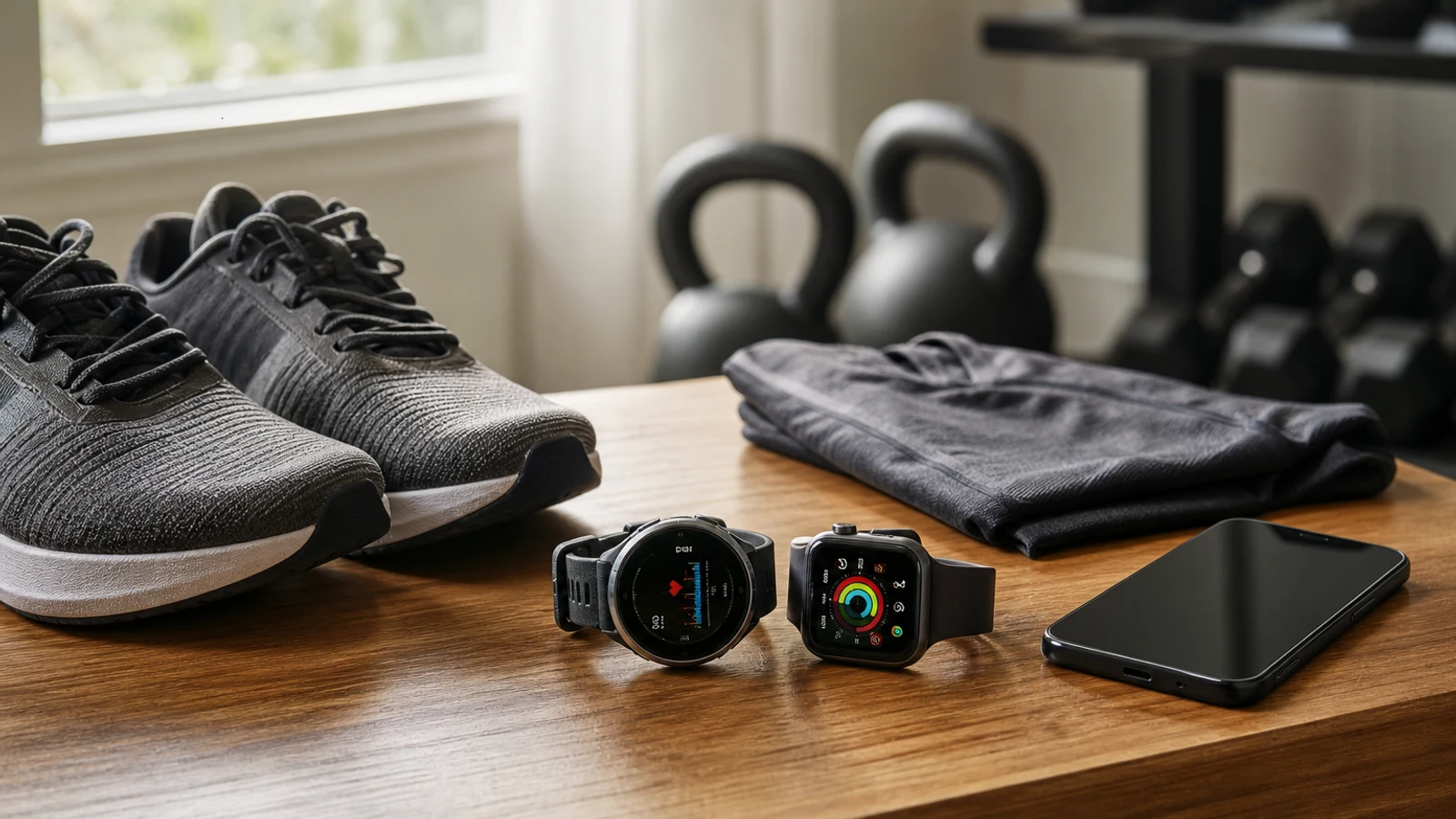
Compare options as you read
Explore options related to this guide. Check the exact product, seller, specifications and current price on Amazon. Image is illustrative.
As an Amazon Associate I earn from qualifying purchases.
Heart Rate, GPS And Fitness Accuracy
It is risky to declare one brand universally more accurate because performance varies by model, fit, activity, skin contact, workout intensity, temperature and whether an external sensor is used. Current Apple Watch models emphasize frequent background heart-rate sampling and health-oriented sensing, while higher-end Garmin watches offer advanced GPS modes, including multi-band positioning on compatible models.
For everyday heart rate, walking, indoor workouts and many outdoor activities, both can provide useful trend data when worn correctly. During intervals, strength training, cycling or activities involving wrist flexion, a watch may struggle to match a properly positioned chest strap. Garmin supports a broad range of external sensors and training accessories, which is valuable for athletes building a more instrumented setup.
Apple Watch is especially compelling if you care about health features beyond exercise. Depending on the model and region, Apple includes ECG, irregular-rhythm notifications, sleep tracking, respiratory measurements, wrist temperature, cycle tracking and other health functions. Availability can vary by country and, in the United States, some blood-oxygen functions are restricted on certain models.
Garmin’s health platform is more fitness-oriented. Features such as Body Battery, stress tracking, HRV status, sleep summaries and training readiness are designed to connect daily recovery with exercise decisions. They can be useful, but they are still algorithmic interpretations rather than diagnoses.
- Look at the exact model, not only the brand name.
- For serious training, prioritize sensor compatibility and GPS modes.
- Treat health alerts as prompts to seek appropriate care, not as a diagnosis.
Battery Life And Sleep Tracking
Battery life is Garmin’s most consistent advantage. The Garmin Forerunner 970 is rated for up to 15 days in smartwatch mode, up to 26 hours in GPS-only mode and up to 21 hours with all-systems multi-band GPS, although actual results depend on display settings, sensors, music, notifications and GPS use. The Venu 4 is rated for up to 10 days in the 41mm size and up to 12 days in the 45mm size in smartwatch mode.
Apple Watch Series 12 is rated for up to 24 hours of normal use and up to 10 hours of workout tracking. Its fast charging helps reduce the inconvenience, including a short charging session before sleep or a workout. The Apple Watch Ultra line lasts longer than the standard models, but it still requires more frequent charging than most Garmin fitness watches.
This difference affects the quality of your data. Garmin is easier to wear continuously through several nights, long weekends, travel days and multi-day outdoor activities. Apple Watch can still track sleep well if you build charging into your routine, but people who dislike nightly charging may leave it off more often.
If sleep and recovery data are important to your decisions, the watch you will actually wear overnight is the better tracker. Garmin wins on charging convenience; Apple wins if fast charging fits naturally into your schedule.
- Choose Garmin for multi-day battery endurance and fewer charging interruptions.
- Choose Apple Watch if fast charging is enough for your routine.
- Battery specifications are maximum estimates and change with settings and usage.
Smartwatch Features And Phone Compatibility
Apple Watch is the better smartwatch. It offers deeper iPhone integration, a larger app ecosystem, richer communication features, Apple Pay, music and podcast controls, safety tools and a polished interface for everyday use. Cellular models can also reduce how often you need to carry your phone, subject to carrier support and plan costs.
The trade-off is platform lock-in. Current Apple Watch models require a compatible iPhone for setup and ongoing use; they are not a practical choice for Android users. Apple’s current compatibility requirements also mean buyers should check the exact iPhone and software version before purchasing.
Garmin watches work with both iPhone and Android phones through Garmin Connect. They can display notifications, store music on compatible models, support contactless payments and offer safety or tracking features. However, Garmin’s app ecosystem and phone interactions are generally less extensive than Apple’s, and some notification controls differ between iPhone and Android.
For an iPhone owner who wants one device to handle workouts, calls, messages and apps, Apple Watch is the smoother choice. For an Android user, Garmin is the obvious option between these two brands. For an iPhone owner who wants the least distracting, most fitness-centered experience, Garmin can still be the better fit.
- Apple Watch requires a compatible iPhone.
- Garmin supports both iPhone and Android phones.
- Apple offers the richer smartwatch ecosystem; Garmin offers the more focused fitness experience.
Which One Fits Your Routine?
Choose Garmin if you train for races, run several times per week, cycle outdoors, hike, swim seriously or want recovery information to shape your next workout. Garmin also makes more sense for shift workers, travelers and anyone who does not want to charge a watch every night. The Forerunner line is the more training-focused choice, while Venu models are aimed at people who want fitness features in a more lifestyle-friendly package.
Choose Apple Watch if you already use an iPhone and want one watch for workouts, sleep, notifications, payments, music, safety and general health tracking. It is especially attractive for casual runners, gym users, walkers and people whose fitness routine changes frequently. Apple’s interface and workout experience may also feel more approachable if you do not want to learn a large training system.
Consider Apple Watch Ultra if you want Apple’s ecosystem with a larger, more rugged design, longer battery life than standard models and stronger outdoor features. Consider Garmin’s higher-end Forerunner or Fenix families if training depth, navigation, ruggedness and endurance battery life matter more than app breadth.
Skip either brand if you only need basic step counting and occasional workouts. A simpler fitness tracker may cost less and require less setup. Also skip the Apple Watch if you use Android, and skip Garmin’s most advanced models if their training data would add complexity rather than help you exercise consistently.
- Best Garmin match for most recreational users: Venu 4
- Best Garmin match for serious runners: Forerunner 970 or another Forerunner model suited to your goals
- Best Apple match for general fitness and daily use: Apple Watch Series 12
- Best Apple match for outdoor and endurance use: Apple Watch Ultra 4
Buying Considerations That Matter More Than Brand
Start with phone compatibility, then decide how often you are willing to charge. Those two factors can eliminate one side immediately. Next, identify the workouts you actually do rather than the features you might someday use. A casual gym routine does not require the same watch as marathon training or multi-day hiking.
Check the exact model’s sensor hardware, GPS modes, water rating, display style, case size and external-sensor support. Larger watches can provide better battery life but may feel bulky during sleep or strength training. AMOLED displays are bright and attractive, while always-on settings can reduce battery life.
Also consider where your data will live. Apple Health and Garmin Connect organize information differently, and switching ecosystems later may require exporting or rebuilding parts of your history. Third-party apps can bridge some gaps, but they may add subscriptions or duplicate data.
Finally, do not buy based on a single accuracy claim or a readiness score. Consistent wear, a comfortable fit and a routine you can maintain will usually matter more than small differences between current premium watches.
- Verify phone compatibility before comparing features.
- Choose the model around your actual workouts.
- Factor in charging, case size and data-platform lock-in.
- Use readiness and recovery scores as guidance, not medical conclusions.
Questions & Answers
Practical follow-up questions readers often ask before acting or buying.
Is Garmin better than Apple Watch for fitness tracking?
Garmin is generally better for structured training, recovery analysis, outdoor workouts and battery life. Apple Watch is better if you want strong fitness tracking combined with iPhone integration, apps, communication and broader everyday health features.
Which is better for running, Garmin or Apple Watch?
Garmin is usually the better choice for runners who want detailed training status, recovery time, load analysis, race planning and long battery life. Apple Watch is a strong choice for casual runners and iPhone users who value a more general-purpose smartwatch.
Does Garmin work with an iPhone?
Yes. Garmin watches pair with iPhone through Garmin Connect. Some notification and interaction features differ from Android, but Garmin fitness tracking works with both major smartphone platforms.
Can I use an Apple Watch with Android?
No. Current Apple Watch models require a compatible iPhone for setup and ongoing use. Garmin is the more suitable choice if your primary phone is Android.
Which has better battery life, Garmin or Apple Watch?
Garmin generally lasts much longer. Depending on the model, Garmin watches can last several days to multiple weeks, while standard Apple Watch models are typically designed around daily charging, with fast charging helping reduce interruptions.
Is Apple Watch accurate enough for serious training?
For many recreational and competitive users, yes. Current Apple Watch models offer GPS workouts, heart-rate zones, training load, running metrics and custom workouts. Athletes who want deeper training analytics, longer battery life or broader sensor compatibility may prefer Garmin.
Sources & Further Reading
Training Readiness | Garmin Technology
Find options for your needs
Explore options related to this guide. Check the exact product, seller, specifications and current price on Amazon. Image is illustrative.
As an Amazon Associate I earn from qualifying purchases.