
Choose a robot vacuum by matching its navigation and obstacle avoidance to your home, its brush and dustbin design to your debris and pet hair, and its mop system to the floors you actually have. LiDAR mapping is useful for systematic coverage and room control, while camera or structured-light obstacle avoidance can reduce encounters with cords, toys and pet messes. For most busy homes, an auto-empty dock is more useful than extreme suction. If you want mopping, prioritize mop lifting or carpet avoidance, washable pads, clean-water management and a dock that washes and dries the pads. Every robot still needs brush, filter, wheel, sensor and dock maintenance.
Start With Your Home, Not the Feature List
Identify the conditions that determine whether a robot can clean reliably. Measure clearance under furniture, note threshold heights and look for cords, toys, floor-length curtains and other objects that could trap a low-profile machine. A robot navigating an open apartment has a different job from one cleaning around chairs and household clutter.
Decide whether you need vacuuming only or a vacuum-and-mop combination. Vacuum-only models may suit carpeted homes, separate-mop owners or shoppers who prefer less wet-pad maintenance. Combination models are useful for hard floors and homes that want daily dust pickup plus light wet cleaning. Neither eliminates occasional manual cleaning.
- List your floor types, including carpet, rugs, tile, hardwood, vinyl and stone.
- Check thresholds and the robot’s published climbing capability.
- Consider pets, children, cords and typical clutter.
- Choose the maintenance level you will realistically accept.
Navigation: Mapping Is Only the First Layer
Prioritize systematic mapping over random bump-and-run navigation. A mapped robot can divide rooms, clean predictable passes, return to its dock and resume after charging. LiDAR is useful for room mapping and generally works well in dark conditions, but its raised sensor turret can affect furniture clearance. Camera-based or structured-light systems may improve object recognition while adding privacy and lighting considerations.
Navigation and obstacle avoidance are different. Mapping identifies rooms and walls; avoidance helps recognize objects in the path. A robot can map accurately and still snag a charger, toy, sock or pet bowl. If floors are tidy, basic mapping may suffice. If objects are often left out, prioritize documented object recognition and still prepare the floor before cleaning.
Look for room scheduling, no-go zones, no-mop zones, multi-floor mapping, resume cleaning and editable room divisions. These controls can matter more in daily use than a large suction number.
- LiDAR supports systematic mapping, room control and repeatable coverage.
- Camera or structured-light avoidance can help with objects but is not infallible.
- Review privacy settings on models with cameras or microphones.
- Verify multi-floor mapping if the robot will be carried between levels.
Pet Hair and Carpet: Focus on Brushes
For pet hair, brush design, airflow, dustbin capacity and cleaning frequency work together. High advertised suction does not show how well a robot lifts embedded hair or prevents wrapping. Look for anti-tangle brush designs, accessible brush ends and capacity suited to your pets’ shedding.
Homes with shedding pets usually benefit from frequent cleaning. Daily or near-daily passes can reduce hair reaching carpet fibers, corners and baseboards. An auto-empty dock helps when the onboard bin fills quickly, though its bag or container becomes another consumable to monitor.
For thick carpet, consult independent evaluations of pet-hair pickup or deep cleaning rather than relying on marketing claims. Robots are often strong maintenance cleaners but weaker than upright or cordless vacuums for embedded debris. Keep a conventional vacuum for stairs, upholstery, edges, high-pile carpet and deeper cleaning.
- Prioritize accessible anti-tangle brushes and replacement parts.
- Consider auto-emptying for multiple pets, heavy shedding or larger homes.
- Check whether suction increases automatically on carpet.
- Keep a conventional vacuum for stairs, furniture, edges and deep carpet.
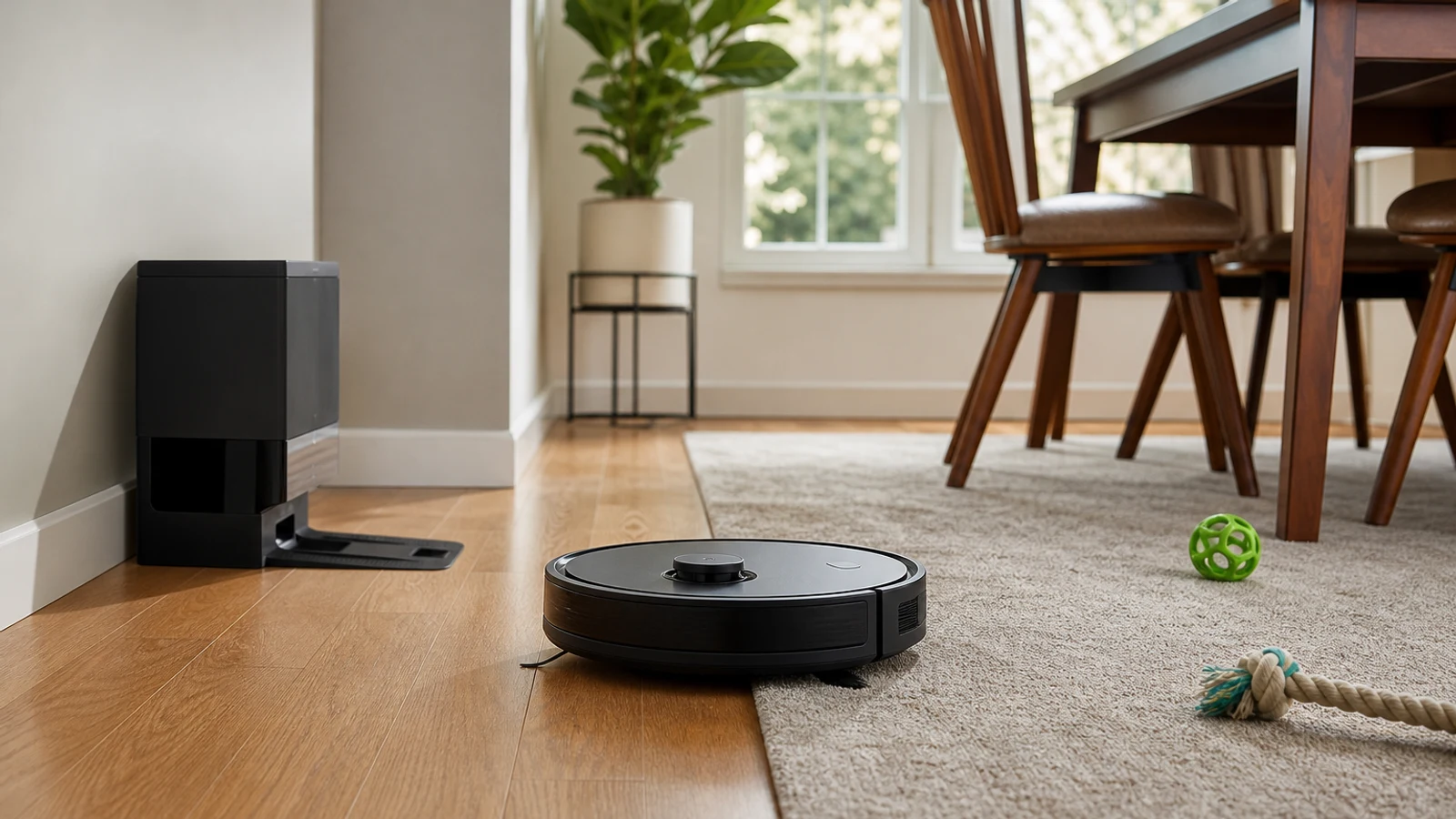
Compare options as you read
Explore options related to this guide. Check the exact product, seller, specifications and current price on Amazon. Image is illustrative.
As an Amazon Associate I earn from qualifying purchases.
Mopping: Understand the Actual Job
Robot mops are maintenance cleaners for dust, footprints, light spills and everyday film, not universal replacements for scrubbing. Flat pads are generally simpler; vibrating, spinning or roller-style systems may add agitation but also cleaning and drying complexity.
For rugs or carpet, look for mop lifting, automatic mop removal or dependable carpet avoidance. Confirm lift height, carpet recognition and no-mop-zone controls. Mostly hard-floor homes may benefit from stronger mop systems and docks that wash and dry pads if the added maintenance fits the routine.
A self-washing dock does not make mopping maintenance-free. You may still refill clean water, empty dirty water, clean the washboard, inspect the drain area and wash or replace pads. Follow the manufacturer’s guidance on cleaning solution.
- For mixed floors, prioritize mop lifting, removal or reliable carpet avoidance.
- Consider spinning, vibrating or roller-style systems only if their care demands fit.
- Treat mopping as light, frequent cleaning rather than stain removal.
- Check water tanks, drying method and replacement-pad costs.
Dock Automation Can Matter More Than Peak Specifications
An all-in-one dock may empty the dustbin, refill water, wash mop pads and dry them. This can make consistent use easier than a small difference in advertised suction. The trade-offs are a larger dock, higher upfront cost and more components to clean or replace.
For vacuum-only homes, auto-emptying usually has the clearest benefit. For mopping homes, pad washing and drying can help because damp, dirty pads may smell and perform poorly. Measure the dock’s footprint and ensure its tanks or dust bags remain accessible.
Automation does not remove all care. Hair can collect in the dock, filters need attention, water trays can develop residue, and supplies may include bags, filters, brushes, pads and cleaning solution. A simpler dock may suit shoppers who prefer fewer parts.
- Auto-emptying is valuable for pet owners and high-debris homes.
- Pad washing and drying matter most when mopping frequently.
- Measure the dock and plan access before choosing its location.
- Price recurring consumables and check replacement-part availability.
Maintenance and Ownership Costs
Every robot needs maintenance: clear hair from brushes, clean or replace filters, wipe sensors and charging contacts, inspect wheels and clean the dustbin or dock. Mopping models add pad washing, water-tank care and dirty-water handling. Use the manual rather than assuming automation makes maintenance optional.
Before buying, check support pages for filters, brushes, bags, mop pads and batteries. Also review account setup, Wi-Fi requirements, software-update policy and privacy controls. Connected maps and, on some models, images or video can reveal information about your home.
Consider several years of ownership costs, including the robot, dock, bags, filters, brushes, pads, cleaning solution and possible battery replacement. A vacuum-only robot may be more practical if you dislike recurring expenses; paying more for automation can make sense when you will use it often.
- Confirm the cost and availability of replacement parts.
- Read the privacy policy for map, image, microphone and video features.
- Check whether important functions require an app or cloud account.
- Budget for routine care even when the dock performs automatic cleaning.
Who Should Buy a Robot Vacuum
A robot vacuum suits people who want frequent maintenance cleaning with less daily effort. It can be especially useful in homes with hard floors, shedding pets, open layouts and predictable schedules. Its main benefit is consistency between deeper cleaning sessions.
It is less suitable for homes with many stairs, thick or shag carpet, frequent clutter, delicate loose rugs, large thresholds or messy pet accidents. A robot still needs a prepared floor, a suitable dock location and periodic human attention.
For many shoppers, spend first on dependable mapping, obstacle avoidance, brush access and a dock that addresses the main chore. Add premium mopping or advanced object recognition only when those features solve a real problem.
- Buy one for frequent scheduled maintenance cleaning.
- Reconsider one for severe clutter, difficult carpet or many stairs.
- Choose simpler equipment if you dislike apps or recurring supplies.
- Keep a manual vacuum for stairs, upholstery, edges and deep cleaning.
A Practical Decision Checklist
Eliminate robots that cannot fit under furniture, cross thresholds or handle your floor mix. Then compare features that affect your routine. For pet hair, compare brush design, carpet results, bin capacity and anti-tangle performance. For mopping, compare pad design, carpet protection, water handling and dock cleaning. For convenience, compare automation and consumable costs. For privacy, favor models without unnecessary cameras or disable optional image and video features when possible.
- Will it fit under furniture and clear your thresholds?
- Does it map rooms and support the zones you need?
- Can it handle your carpets, rugs, hair and typical debris?
- How does it protect carpet while mopping?
- What does the dock automate, and what remains manual?
- What recurring parts and supplies are required?
- What home data does the app collect, and what can you disable?
Questions & Answers
Practical follow-up questions readers often ask before acting or buying.
Is LiDAR better than camera navigation in a robot vacuum?
Neither is automatically better for every home. LiDAR is useful for systematic mapping and generally works well in darkness, while camera or structured-light systems can improve object recognition. The best choice depends on furniture clearance, clutter, lighting, privacy preferences and the quality of the specific model’s software.
Do robot vacuums really work with pet hair?
They can be effective maintenance cleaners for pet hair, especially when run frequently and paired with an auto-empty dock. Look for accessible anti-tangle brushes, strong independent carpet and pet-hair evaluations, and a dustbin or dock that can handle your shedding level. Keep a manual vacuum for deeply embedded hair, stairs and upholstery.
Are robot vacuum mops worth it?
They are worth considering if you have mostly hard floors and want frequent light mopping with less effort. They are less compelling if you have mostly carpet, rarely mop or expect the robot to remove heavy stains. Mixed-floor homes should prioritize mop lifting, mop removal or reliable carpet avoidance.
How much maintenance does a robot vacuum need?
Expect regular brush and filter care, sensor and wheel checks, dustbin or dock cleaning and occasional replacement of wear parts. Mopping models also need clean-water refills, dirty-water disposal, pad care and wash-tray cleaning. The exact schedule depends on the model and how much debris it collects.
Can a robot vacuum replace a regular vacuum?
Usually not completely. A robot is best at frequent floor maintenance, while a regular vacuum remains useful for stairs, furniture, edges, high-pile carpet, tight spaces and deep cleaning. The more difficult your home’s layout and floor types, the more important that backup becomes.
Sources & Further Reading
Find options for your needs
Explore options related to this guide. Check the exact product, seller, specifications and current price on Amazon. Image is illustrative.
As an Amazon Associate I earn from qualifying purchases.