
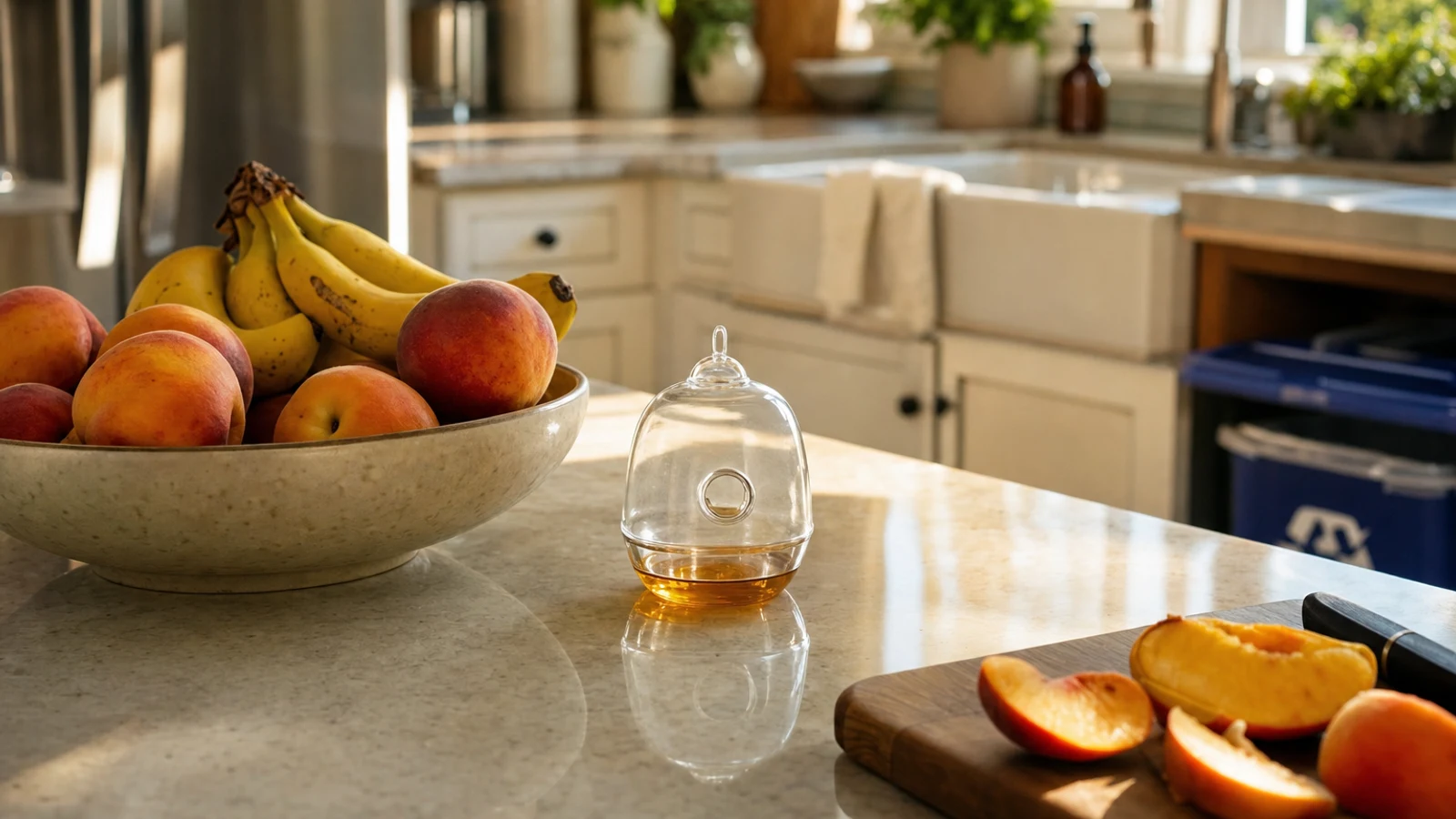
To get rid of fruit flies, discard or refrigerate ripe produce, clean trash and recycling containers, inspect the garbage disposal and drains, remove hidden food residue, and place vinegar traps near the activity. Keep sanitation measures in place for at least several days because adults may continue emerging after the original source is removed.
First, Make Sure They Are Fruit Flies
Typical indoor fruit flies are tiny—about one-eighth of an inch or smaller—with tan or yellow-brown bodies and noticeable red eyes. They usually hover around fruit bowls, recycling, wine or beer residue, trash containers, and kitchen sinks. They are primarily a nuisance, although any fly that lands on food can contribute to contamination.
Not every tiny flying insect in a kitchen is a fruit fly. Drain flies look fuzzy or mothlike and tend to rest near sinks, showers, and floor drains. Fungus gnats look more like miniature mosquitoes and are commonly associated with damp houseplant soil. Phorid flies may run or move in short bursts and can indicate decaying organic material or plumbing problems. A vinegar trap may catch some of these insects, but it will not solve the underlying source if the identification is wrong.
- Fruit flies: tan or brown, often red-eyed, attracted to fermenting food and liquids.
- Drain flies: fuzzy, mothlike, and concentrated around moist drains.
- Fungus gnats: slender, dark insects associated with damp potting soil.
Find The Breeding Source Before Buying Anything
Fruit flies lay eggs in moist, fermenting organic material. The obvious source may be an overripe banana, but the actual breeding site can be less visible. Inspect every place where a small amount of food residue, moisture, or fermentation could persist.
Start with the fruit bowl, produce drawers, onions, potatoes, squash, and any forgotten produce in a cabinet. Then check the bottom and lid of the trash can, the recycling bin, compost containers, bottles and cans, sticky spills under appliances, and the tray beneath a refrigerator. A damp mop head, sour-smelling cleaning cloth, or food residue inside a garbage disposal can also support flies.
If activity is concentrated around a sink, inspect the drain opening, stopper, overflow channel, disposal splash guard, and drain trap. Fruit flies can use organic buildup in these areas, although persistent flies that look fuzzy or remain near the drain may actually be drain flies. A slow drain, unpleasant odor, bubbling, or recurring flies near one fixture is a reason to investigate the plumbing rather than relying on a countertop trap.
- Discard heavily overripe or leaking produce in a sealed bag.
- Wash the inside and underside of trash and recycling containers.
- Rinse bottles and cans before storing them indoors.
- Check under appliances and inside refrigerator drain or drip areas.
- Inspect sink overflows, disposal parts, and drains when flies cluster there.
Remove The Source And Clean The Area
Throw away or seal the suspected breeding material first. If you leave the source in place while trapping adults, new flies can continue emerging and make the traps appear ineffective. Take outdoor garbage and compost out promptly, and clean any container that held leaking produce or food scraps.
Wash counters, cabinet edges, appliance gaps, and the floor around the trash can with ordinary household cleaner. Pay particular attention to sticky film that may be nearly invisible. Clean the garbage disposal splash guard and the visible drain opening with a brush. If a drain appears to be the source, mechanical cleaning that removes organic buildup is more useful than simply pouring a liquid down it.
Do not mix bleach, ammonia, or other cleaning chemicals. Do not pour insecticide into a drain unless the product label specifically allows that use. Boiling water or bleach may provide temporary relief in some situations but will not reliably remove established organic buildup, and harsh chemicals can damage plumbing or create dangerous fumes when mixed.
- Keep counters, sinks, and drain openings dry overnight.
- Empty indoor food waste frequently during an infestation.
- Wash reusable compost pails and trash cans instead of only replacing the liner.
- Use a brush to remove residue from disposal guards and drain openings.
- Follow every label exactly when using a commercial drain or pest-control product.
Use A Trap For The Adults You Can See
A vinegar trap is useful for reducing adult fruit flies after the breeding source has been removed. Pour a small amount of apple cider vinegar into a glass or jar and add a drop of dish soap. The vinegar provides an attractive fermented scent, while the soap reduces surface tension so flies are less likely to escape. You can also use a paper funnel in the opening, leaving a small path for flies to enter but making it harder for them to leave.
Place traps where flies are most active, such as beside the fruit bowl, trash can, recycling area, or sink. Replace the bait when it becomes dirty or loses its smell, and clean the container before refilling it. Keep traps away from food-preparation surfaces and out of reach of children and pets.
Commercial fruit-fly traps can be convenient if you do not want an open jar of vinegar, but they are not a substitute for sanitation. A trap kills or captures adults; it does not remove larvae developing in produce, drain residue, trash, or recycling containers. Sticky cards may help monitor activity but are usually less useful than source removal for a kitchen infestation.
- Use several small traps rather than one trap across the room from the activity.
- Keep the bait fresh and place traps close to suspected sources.
- Vacuum or swat visible adults when practical.
- Do not expect a trap alone to end a continuing infestation.
Give The Cleanup Enough Time To Work
Fruit flies develop quickly, so seeing a few adults after cleaning does not necessarily mean the cleanup failed. Eggs or larvae already present may continue developing, and adults can remain active for several days. Continue removing food residue, emptying waste, and refreshing traps while monitoring whether the number of flies steadily declines.
If the population does not decrease after several days of careful sanitation, repeat the inspection from the beginning. Hidden sources are common: a forgotten onion or potato, residue inside a recycling container, a damp rag, a spill beneath an appliance, or a clogged area around a disposal. Check rooms beyond the kitchen if flies appear near pet-food bowls, beverage stations, laundry areas, or indoor plants.
If flies are emerging from more than one drain, returning despite repeated cleaning, or accompanied by sewage odors, leaks, or slow drainage, the problem may involve drain flies or a plumbing leak rather than ordinary fruit flies. At that point, a plumber or licensed pest professional may be more useful than additional traps.
- Track whether the number of flies is falling each day.
- Reinspect hidden and rarely moved items if activity continues.
- Use clear tape loosely across a suspicious drain overnight to help identify activity beneath it.
- Escalate when there are leaks, sewage odors, inaccessible voids, or persistent unexplained activity.
Prevent Fruit Flies From Coming Back
The best prevention plan reduces both food access and moisture. Store ripe fruit in the refrigerator when practical, or buy smaller quantities that can be eaten before they soften. Wash produce when appropriate, dry it, and inspect it regularly. Do not leave cut fruit, juice, wine, beer, or sugary drinks uncovered.
Use a covered compost container and empty it frequently. Rinse recyclables before placing them in the bin, and clean the bin if liquid or residue accumulates. Keep trash-can lids, disposal areas, and sink surfaces clean. Repair dripping faucets or pipes and address slow drains before organic buildup becomes established.
Screens on windows and doors can reduce entry, but exclusion is secondary to sanitation. A clean kitchen can still receive occasional adults from outdoors, while a hidden breeding site can continue producing flies even when doors and windows remain closed.
- Refrigerate ripe or cut produce.
- Rinse cans and bottles before recycling.
- Empty compost and food waste regularly.
- Keep sink areas dry and repair leaks.
- Clean spills under appliances as soon as they happen.
What Not To Buy
Most households do not need an insect fogger, bug zapper, or repeated indoor spray for a small fruit-fly problem. These products may kill exposed adults without reaching eggs and larvae in the breeding material. Spraying around food, dishes, countertops, or drains also creates avoidable label and cleanup concerns.
A trap is worth considering when you want a low-effort way to capture adults while you clean, especially if the flies are concentrated in one area. A drain-cleaning product may be appropriate for organic buildup only when used according to its label, but it should not replace brushing, rinsing, or repairing the underlying plumbing issue. If you cannot locate the source after a thorough inspection, or if the insects do not match fruit flies, spend your next dollar on accurate identification or professional diagnosis rather than buying stronger chemicals.
- Buy a trap for monitoring and adult reduction, not as the entire solution.
- Avoid foggers for a localized kitchen infestation.
- Do not use unlabeled household mixtures as pesticides.
- Do not keep buying products when the insect may be a drain fly or fungus gnat.
Questions & Answers
Practical follow-up questions readers often ask before acting or buying.
How long does it take to get rid of fruit flies?
Small infestations may decline within several days after the breeding source is removed, but adults can continue appearing while existing eggs and larvae develop. Keep cleaning and trapping until activity has clearly stopped rather than stopping after the first quiet day.
Will apple cider vinegar alone kill fruit flies?
Vinegar attracts fruit flies but does not reliably trap them by itself. Adding a small amount of dish soap can make the surface harder for flies to escape. The trap works best after ripe produce, residue, trash, and other breeding sources have been removed.
Are fruit flies coming from the drain?
They can use organic residue in drains, but drain flies are more commonly associated with drain buildup. If the insects are fuzzy or remain concentrated near a sink, shower, or floor drain, identify them before treating the area. Persistent activity may require mechanical drain cleaning or plumbing help.
Why do fruit flies keep coming back after cleaning?
There is usually another food or moisture source, such as recycling residue, a forgotten vegetable, a damp rag, a disposal splash guard, a refrigerator drip area, or a leak. Adults may also continue emerging for several days from material that was missed during the first cleanup.
Should I use bug spray for fruit flies?
Usually not for a typical kitchen infestation. Indoor sprays may kill exposed adults temporarily but do not remove the breeding source. Sanitation, source removal, traps, and—when necessary—professional identification are generally more useful. Any pesticide used indoors must be specifically labeled for the location and pest.
Sources & Further Reading
Moth or Drain Flies / Home and Landscape / UC Statewide IPM Program (UC IPM)
Flies in the Home | Colorado State University Extension
Flies / Home and Landscape / UC Statewide IPM Program (UC IPM)