
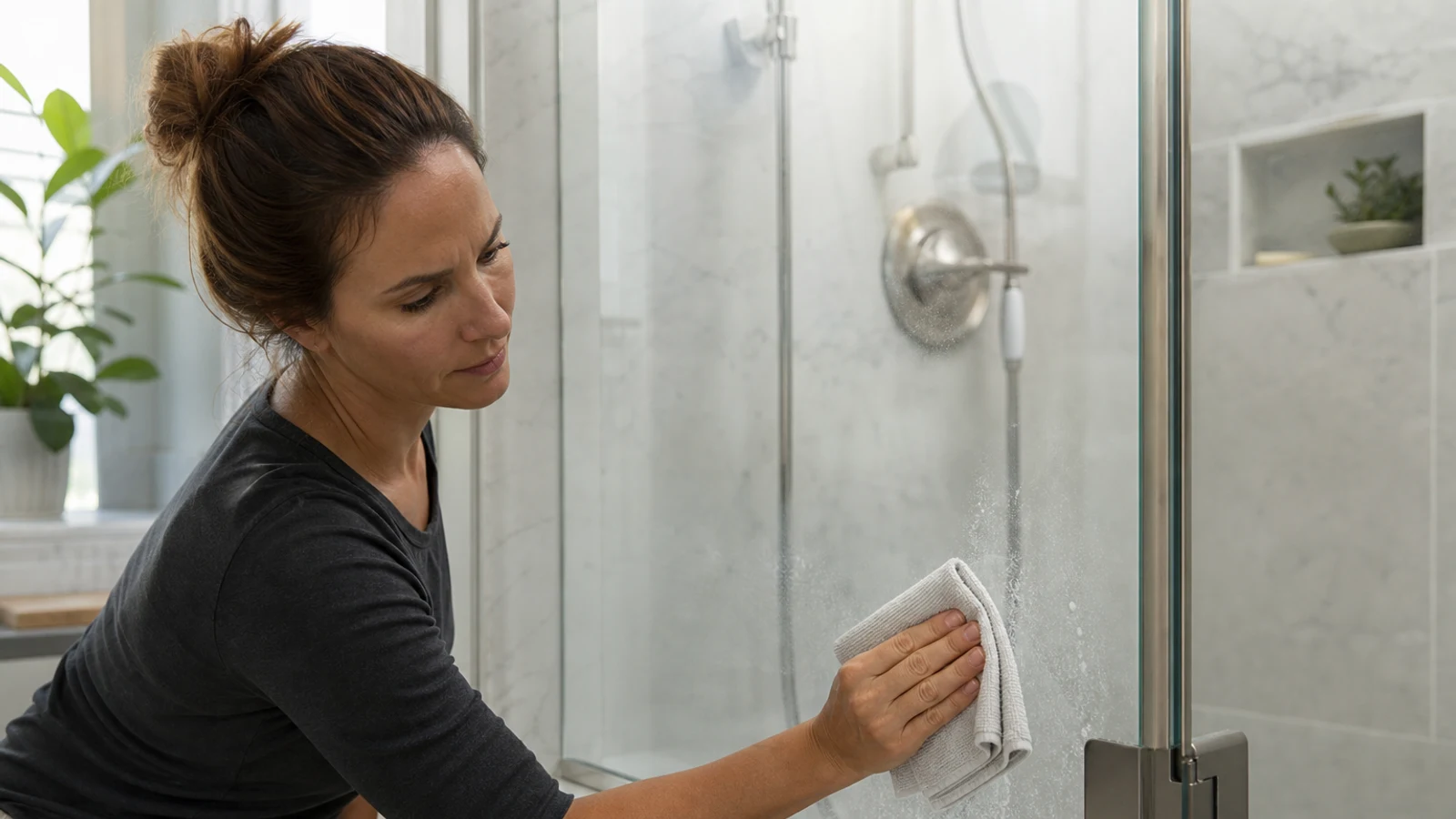
For most hard, chalky deposits on glass, porcelain, ceramic tile, and compatible metal fixtures, begin by softening the buildup with a cloth soaked in a 50/50 solution of white vinegar and water. Let it work briefly, wipe with a non-abrasive sponge, rinse thoroughly, and dry. Do not use vinegar or other acids on marble, limestone, travertine, unsealed stone, sensitive grout, or any surface whose manufacturer prohibits acidic cleaners. Test first in an inconspicuous area.
What Hard Water Stains Actually Are
Hard water contains dissolved minerals, primarily calcium and magnesium. When droplets evaporate, those minerals remain behind as cloudy spots, white crust, rings, or rough scale. The same process can restrict flow through faucet aerators and showerheads. The deposit may look like soap scum, but soap residue is usually softer and more greasy, while mineral scale feels gritty, chalky, or firmly bonded.
A mild acid can dissolve many carbonate-based mineral deposits. That is why diluted white vinegar is useful on some fixtures. The problem is that acids do not distinguish between mineral scale and acid-sensitive materials. They can etch calcareous stone, weaken or discolor some grout, dull certain tile surfaces, and damage plated or coated finishes if left in place too long.
- White or cloudy film usually suggests mineral scale.
- A rough crust around spray holes is often calcium buildup.
- Dark, greasy, or sticky residue may be soap scum or grime instead.
- Etching is surface damage, not leftover dirt; stronger cleaner will not reverse it.
Identify the Surface Before Cleaning
The material matters more than the stain. Glass, glazed ceramic, porcelain, and many ordinary chrome fixtures generally tolerate carefully controlled mineral removal. Natural stone requires much more caution. Marble, limestone, and travertine contain minerals that can react with acids, including vinegar and lemon juice. Some granite, sealers, coatings, colored grout, and specialty faucet finishes may also be unsuitable for acidic cleaners.
If you are unsure what a countertop, tile, or fixture is made from, use the least aggressive method first: warm water, a soft microfiber cloth, and a small amount of mild dish detergent. Check the care instructions for the exact product when available. A finish that looks like chrome may actually be brushed, painted, PVD-coated, lacquered, or otherwise treated.
Before applying any cleaner, test it in a hidden area. Use the intended dilution, wait only as long as necessary, rinse completely, and inspect the surface after it dries. A test spot is especially important on dark stone, colored grout, brushed metal, acrylic, and older or already-worn finishes.
- Usually more tolerant: glass, glazed porcelain, ceramic tile, and removable metal aerators.
- Use caution: plated fixtures, brushed or colored finishes, acrylic, coated glass, and grout.
- Avoid acids unless specifically approved: marble, limestone, travertine, and many unsealed stones.
The Safest General Method
Begin with physical removal, not stronger chemistry. Wipe away loose dirt with warm water and a soft cloth. If the surface is dusty or gritty, rinse it first so you do not rub abrasive particles across the finish.
For a compatible surface, mix equal parts white vinegar and water. Saturate a cloth rather than flooding the entire area, then place it over the deposits. A short contact time is usually safer than spraying repeatedly and letting the solution dry. After several minutes, gently wipe with a microfiber cloth or non-abrasive sponge. Repeat the short soak if necessary instead of switching immediately to a harsher product.
Rinse thoroughly with clean water to remove dissolved minerals and cleaner residue. Dry or buff the surface with a soft towel. Drying is not just cosmetic: allowing droplets to evaporate in place creates another layer of mineral residue. Never use a razor, steel wool, scouring powder, or abrasive pad unless the surface manufacturer specifically approves it.
- Loosen first with water and a soft cloth.
- Use a controlled, damp-cloth application rather than an uncontrolled spray.
- Use short contact times and repeat gently if needed.
- Rinse completely and dry after every treatment.
How To Remove Stains From Common Surfaces
Glass shower doors: Start with warm water and a non-abrasive sponge. On ordinary, uncoated glass, use diluted vinegar on a cloth for mineral spots, then rinse and dry. Avoid abrasive powders and aggressive scraping, which can scratch glass or damage protective coatings. If the door has a factory-applied water-repellent treatment, follow that coating’s care instructions instead of assuming vinegar is safe.
Chrome and compatible metal fixtures: Wipe with warm water first. If deposits remain, apply diluted vinegar with a soft cloth for a short period, then rinse thoroughly and dry. Do not use abrasive polish, harsh bathroom cleaner, bleach, or products containing strong acids unless the manufacturer specifically allows them. For brushed, matte, bronze, black, or specialty finishes, manufacturer instructions take priority over general vinegar advice.
Faucet aerators and removable showerheads: Removing the affected part can make cleaning safer and more effective. Soak only the removable component in diluted vinegar, then brush loosened deposits gently with a soft toothbrush. Rinse all passages thoroughly before reinstalling. Do not force a stuck fitting; excessive twisting can damage the part or the plumbing connection.
Ceramic, porcelain, and ordinary tile: A diluted acid may remove mineral scale from compatible glazed surfaces, but grout can be more vulnerable. Keep the solution targeted, avoid letting it dry, and rinse well. If the deposit is widespread or mixed with grout haze, use a product specifically labeled for the exact tile and grout type rather than improvising with a strong acid solution.
- For glass, avoid abrasive tools and check whether a protective coating is present.
- For faucets, blot dry and never let acidic cleaner sit on the finish indefinitely.
- For removable parts, soak the part instead of the whole fixture when possible.
- For tile and grout, confirm acid compatibility before using vinegar or a descaler.
What To Do With Marble, Limestone, Travertine, and Other Stone
Do not use vinegar, lemon juice, bathroom descaler, or other acidic products on marble, limestone, travertine, or unknown natural stone. These cleaners can etch the surface, leaving a dull patch or a texture change that is not removable by ordinary cleaning.
Use a pH-neutral stone cleaner or mild dish detergent diluted in warm water. Wipe gently with a soft cloth, rinse with clean water, and dry. For a thin surface accumulation, a stone-care professional may recommend a suitable non-acidic cleaning method or a carefully selected polishing approach. Do not assume that a sealer makes stone acid-proof; sealing can improve stain resistance but does not make every stone immune to chemical damage.
If the spot remains dull after the deposit is gone, the problem may be etching rather than scale. Stop cleaning and seek advice from the stone supplier, fabricator, or a qualified stone-restoration professional. Continuing to scrub can enlarge the damaged area.
- Never test vinegar first on unknown stone.
- A dull mark may be etching, not a stain.
- Use neutral stone products and soft tools.
- Professional refinishing may be needed for visible etching.
Mistakes That Cause More Damage
The most common mistake is choosing a cleaner before identifying the surface. Another is leaving vinegar or a commercial descaler on the material until the deposit disappears. Prolonged contact can damage finishes even when a brief application would have been acceptable.
Avoid combining cleaners. Never mix bleach with ammonia, acids, or other household chemicals. Do not add baking soda to vinegar expecting a stronger cleaner; the reaction mainly neutralizes the acid and creates fizz rather than a more effective descaler. Keep the area ventilated, wear gloves if the product label recommends them, and follow the label for any commercial cleaner.
Do not attack stubborn buildup with a metal blade or heavy abrasive by default. Scratches, dull patches, and stripped coatings are often more expensive to repair than the original deposit. If the buildup is thick, several short treatments with rinsing between them are safer than one aggressive treatment.
- Do not use a bathroom descaler on unknown materials.
- Do not let cleaner dry on the surface.
- Do not mix bleach, ammonia, vinegar, or commercial cleaners.
- Do not use abrasive tools before checking the manufacturer’s care guidance.
How To Prevent Hard Water Stains From Returning
Prevention is usually easier than removal. After showering or cleaning, use a squeegee or soft towel to remove standing water from glass and fixtures. Wipe faucets and showerheads dry when practical, especially around seams, spray holes, and flat surfaces where droplets collect.
Clean small deposits regularly rather than waiting for a thick crust. A mild cleaner approved for the surface is easier to control than a strong descaler. Keep shower screens, aerators, and spray holes on a simple maintenance schedule if your water produces frequent scale.
If deposits appear throughout the home, the long-term issue may be water hardness rather than housekeeping. A water test can confirm hardness. A properly selected and maintained water-softening system may reduce calcium and magnesium entering the plumbing, but it adds equipment, maintenance, and sometimes salt or water use. It is not necessary for a few cosmetic spots, and it will not repair existing etching or damaged finishes.
- Squeegee shower glass after use.
- Dry faucets and fixtures instead of letting droplets evaporate.
- Clean aerators and showerheads before flow becomes restricted.
- Consider water treatment only when hard water is a recurring household problem.
When To Stop DIY Cleaning
Stop if the surface becomes dull, discolored, rough, sticky, or visibly different from the surrounding area. Rinse with clean water and do not apply another chemical to counteract the first one. Contact the manufacturer or a qualified professional if the material is valuable, antique, heavily coated, natural stone, or already damaged.
Professional help is also appropriate when scale has entered inaccessible plumbing components, when a faucet or valve is leaking after attempted disassembly, or when a showerhead or aerator cannot be removed without force. A replacement part may be safer and less expensive than damaging the fixture or connection.
The goal is not to use the strongest cleaner. It is to remove the deposit while leaving the original surface unchanged. When the material is uncertain, gentle cleaning and manufacturer guidance are better choices than an aggressive household recipe.
- Stop when the surface appearance changes.
- Get help for etching, specialty finishes, valuable stone, or damaged plumbing.
- Replace an inexpensive clogged component rather than forcing it apart.
- When in doubt, choose a neutral cleaner and a soft cloth.
Questions & Answers
Practical follow-up questions readers often ask before acting or buying.
Is white vinegar the best way to remove hard water stains?
It is a useful low-cost option for some compatible surfaces, including many glass, ceramic, porcelain, and metal applications. It is not suitable for marble, limestone, travertine, many unsealed stones, and some specialty finishes. Use a diluted solution, short contact time, thorough rinsing, and a hidden-area test.
Can I use vinegar on a granite countertop?
Do not assume it is safe. Granite varies in mineral composition, finish, and sealer compatibility. Use a neutral stone cleaner unless the stone supplier specifically confirms that diluted vinegar is appropriate for that exact surface.
How do I remove hard water stains from a shower door?
Rinse away loose grit, then try diluted vinegar on ordinary uncoated glass with a soft cloth. Let it work briefly, wipe gently, rinse completely, and dry. Follow the manufacturer’s instructions if the glass has a protective coating.
Will baking soda remove hard water stains?
Baking soda can provide mild abrasive cleaning, but abrasives may scratch or dull some surfaces. It is usually not the first choice for mineral scale, and mixing it with vinegar largely neutralizes the acid rather than creating a stronger cleaner.
Why do hard water stains keep coming back?
They return because new water droplets evaporate and leave minerals behind. Drying fixtures, squeegeeing glass, cleaning small deposits early, and addressing unusually hard water can reduce recurrence.
Are hard water stains permanent?
Mineral deposits may be removable, but acid etching, scratches, stripped coatings, and discoloration are forms of surface damage. If a spot remains dull after the deposit is removed, additional cleaning may make it worse and professional assessment may be needed.
Sources & Further Reading
Natural Stone Institute - Learn About Cleaning Products for Natural Stone
Hard Water, Calcium or Mineral Buildup on Faucet | Kitchen Faucets | Kohler Assist